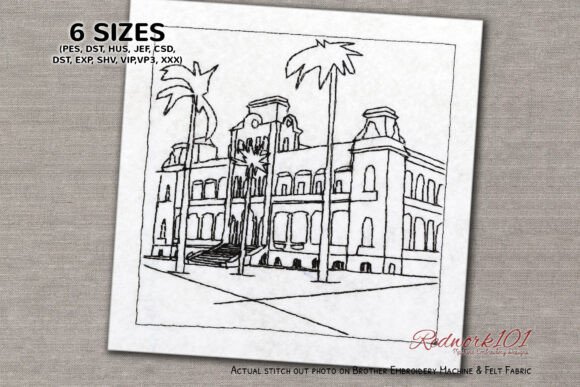
Royal Iolani Palace Embroidery Design Review
As an embroidery designer who spends countless hours digitizing and stitching for both personal projects and commercial clients, I am always on the lookout for design assets that offer historical depth without sacrificing stitch quality. Recently, I evaluated the Royal Iolani Palace Embroidery Design available on Creative Fabrica with a specific goal in mind: determining its viability for a new line of travel-themed home decor and educational apparel. This review breaks down the visual appeal, technical considerations, and commercial potential of this unique machine embroidery design.
First Impressions and Visual Mood
Upon opening the preview files, the immediate standout feature of the Royal Iolani Palace Embroidery Design is its elegant "redwork" style. In an era where dense, high-count satin fills dominate the market, this sketch-style approach offers a refreshing change of pace. The design captures the architectural grandeur of the historic ʻIolani Palace using clean lines that suggest a hand-drawn aesthetic. This gives the embroidery file a regal yet accessible personality, making it feel less like a rigid logo and more like a piece of art.
The visual mood is distinctly nostalgic and educational. It evokes a sense of Hawaiian heritage and royal history, which makes it an excellent fit for the Vacation category. Unlike generic tropical motifs featuring palm trees or hibiscus flowers, this design speaks to culture and architecture. For a designer looking to create something sophisticated for a boutique hotel gift shop or a history-focused classroom project, this level of detail provides a strong foundation. The lack of heavy fill stitches means the design relies entirely on the precision of the outline, demanding a well-calibrated machine but rewarding the user with a crisp, professional look.
Practical Applications for Handmade Products
When considering where to apply this digital embroidery file, the versatility is surprisingly broad. Because the design avoids massive blocks of thread, it sits beautifully on a variety of substrates. Here is how I envision using it in real-world scenarios:
- Tote Bag Design: The linear nature of the sketch works perfectly on canvas tote bags. It creates a chic, museum-shop vibe that appeals to tourists and locals alike.
- Custom Apparel: For sweatshirt embroidery, this design adds a subtle touch of elegance to the chest or sleeve without weighing down the fabric. It is ideal for alumni groups or historical society merchandise.
- Kitchen Towels and Aprons: The redwork style is traditional in linen embroidery, making this a natural choice for heirloom-quality kitchen textiles.
- Nursery Decor: For a nursery with a travel or world-culture theme, this could be stitched onto a pillow cover or framed as wall art to teach children about global landmarks.
- Educational Themes: Teachers or homeschooling parents could use this for unit studies on Hawaii, stitching it onto project bags or commemorative patches.
For Etsy sellers and small business owners, the uniqueness of the subject matter is a significant selling point. While many shops sell generic "Aloha" designs, a precise rendering of the ʻIolani Palace targets a niche audience interested in specific landmarks and history. This specificity can increase buyer trust and allow for higher pricing on your finished product.
Technical Considerations and Stitching Performance
While the aesthetic is promising, a professional review must address the technical realities of stitching this design. Since the product description highlights it as a "sketch" and "redwork," we can infer that the stitch density is likely low, relying heavily on running stitch or fine satin columns. This has several implications for your workflow.
First, fabric selection is critical. On textured fabrics like terry cloth towels or thick fleece sweatshirts, very fine running stitches can sometimes get lost or appear uneven if the needle deflects off the texture. I strongly recommend testing on scrap fabric that matches your final material. If you are stitching on dark fabric, ensure you select a high-contrast thread colors scheme; the redwork tradition typically uses red thread on white, but modern interpretations might use gold or white thread on navy for a striking effect.
Second, consider the hoop size. Architectural designs often require a larger field to maintain the integrity of the proportions. Before purchasing, you must check the product details on the Creative Fabrica page to confirm the available sizes. If the design is only available in a small hoop, the intricate details of the palace windows and rooflines may become muddy. Conversely, if the file includes large formats, it opens up possibilities for larger items like quilt blocks or table runners.
Stabilizer choice is another non-negotiable factor. Even with lower density, architectural lines need to remain straight. Using a cut-away stabilizer is advisable for garments that will undergo frequent washing, such as t-shirts or aprons, to prevent puckering over time. For caps, be cautious; the curved surface of a cap can distort long, straight lines unless the design has been specifically digitized for headwear. If this is a flat embroidery file, avoid forcing it onto a structured cap without extensive testing.
Commercial Viability and Brand Consistency
For those running a commercial embroidery business, the value of the Royal Iolani Palace Embroidery Design lies in its ability to elevate brand perception. Using high-quality, culturally significant imagery demonstrates attention to detail and respect for the subject matter. This builds buyer trust. When customers see a well-executed landmark design, they perceive the entire handmade product as higher quality.
This design also excels in product photography. The clean lines photograph well without the glare that sometimes occurs with dense satin stitches. This makes creating printable mockup images for your online store much easier, as the design looks clear and distinct even in thumbnail views. Whether you are selling a personalized gift for a traveler or creating stock for a boutique, the visual appeal of this design can drive customer engagement.
However, always verify the licensing terms on the Creative Fabrica product page before selling. While many files come with commercial licenses, some may have restrictions on the number of physical items you can sell or require attribution. Ensuring you are compliant protects your business and maintains your reputation as a trustworthy seller.
Final Verdict for Designers
The Royal Iolani Palace Embroidery Design is a compelling addition to any library focused on travel, history, or architectural themes. Its strength lies in its simplicity and cultural resonance. It is not a "fill-every-inch" design, which actually works in its favor for modern, minimalist aesthetics. However, success with this file depends on careful preparation. You must confirm the hoop size compatibility, choose the right stabilizer for your fabric, and test stitch density on your specific machine.
If you are looking to expand your catalog beyond standard floral or monogram motifs, this embroidery file offers a sophisticated alternative. It invites the viewer to appreciate the history of the ʻIolani Palace while showcasing your skill in executing clean, precise lines. For commercial embroidery projects targeting the vacation market or educational sectors, this design holds significant potential to create memorable, high-value items.
Before diving into production, I advise downloading the font pairings if available (often included with such thematic sets) to create cohesive text additions, and always run a test stitch on a similar fabric weight to your final product. With the right preparation, the Royal Iolani Palace Embroidery Design can be the centerpiece of a stunning collection of handmade goods.